DOPANT-INDUCED MODULATION OF OPTICAL PROPERTIES AND BANDGAP ENGINEERING IN PBS NANOMATERIALS
DOI:
https://doi.org/10.71146/kjmr711Keywords:
Lead sulphide (PbS), Doped nanomaterials, Co-precipitation, Optical properties, Electronic devices, OptoelectronicsAbstract
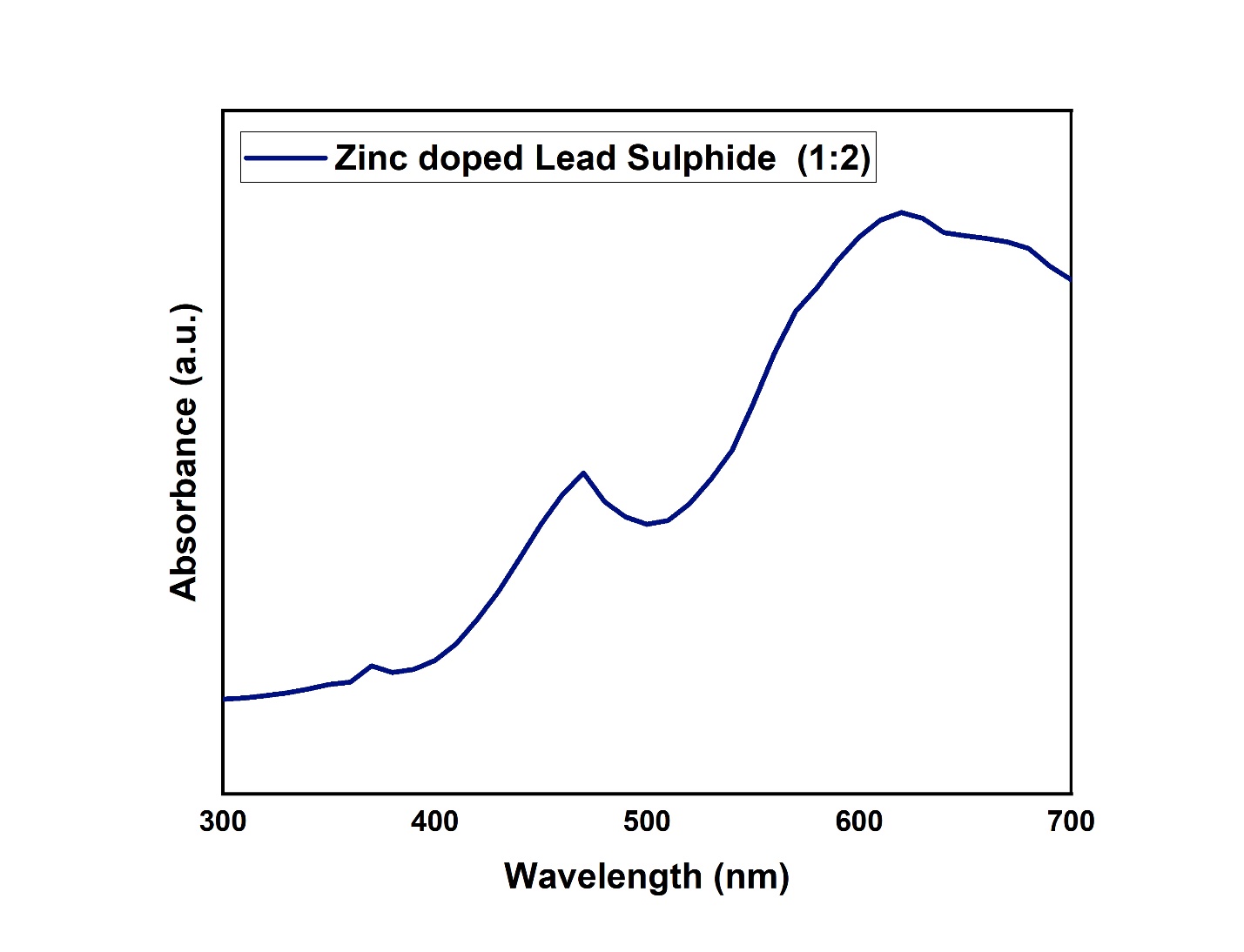
Because of their remarkable optical, electrical, and structural qualities, which make them valuable in next-generation electronics, Lead sulphide (PbS) nanoparticles have attracted a lot of attention recently. The band gap, crystal size, defect concentration, and charge carrier transport of PbS may all be changed by doping, which has a lot of potential. These alterations may make the PbS compound's nanomaterials suitable for application in solar cells, optoelectronic devices, sensors, and photodetectors. It is simple to dope nanomaterials using a variety of synthetic techniques, including co-precipitation. The material's characteristics will be affected by the choice of dopant type and target concentration, optimizing the material for usage in a specific application. Furthermore, controlling surface shape and particle size may improve device performance. The creation of more compact and energy-efficient electronic components is another application for the nanomaterials. The problems of lead toxicity, defect control, and material stability still need to be investigated. Future research should focus on optimizing the synthesis conditions and investigating environmentally friendly synthesis routes. To put it briefly, PbS doped nanostructured materials show promise as a source of various sophisticated and effective electronic devices. The synthesis of doped nano Lead sulphide using the co-precipitation approach and the examination of the nanoparticles' optical characteristics for usage in optoelectronics and electrical devices were the main topics of this work.
Downloads
References
Mamiyev, Z., & Balayeva, N. O. (2023). PbS nanostructures: A review of recent advances. Materials Today Sustainability, 21, 100305. https://doi.org/10.1016/j.mtsust.2022.100305
Mourdikoudis, S., Pallares, R. M., & Thanh, N. T. K. (2018). Characterization techniques for nanoparticles: Comparison and complementarity upon studying nanoparticle properties. Nanoscale, 10, 12871–12934. https://doi.org/10.1039/C8NR02278J
Parveen, A., Agrawal, S., & Azam, A. (2018). Band gap tuning and fluorescence properties of lead sulfide Pb₀.₉A₀.₁S (A: Fe, Co, and Ni) nanoparticles by transition metal doping. Optical Materials, 76, 21–27. https://doi.org/10.1016/j.optmat.2017.12.015
Effect of Zn doping concentration on optical band gap of PbS thin films. (2019). Journal of Alloys and Compounds, 792, 1000–1007. https://doi.org/10.1016/j.jallcom.2019.04.117
Optical characterizations of lightly doped (PbS)₁₋ₓZnₓ thin films influenced by film thickness and annealing temperature for applications in highly intensive radiation systems. (2023). Journal of Materials Science: Materials in Electronics. https://doi.org/10.1007/s10854-023-11274-0
Borhade, A. V., & Uphade, B. K. (2012). A comparative study on characterization and photocatalytic activities of PbS and Co-doped PbS nanoparticles. Chalcogenide Letters, 9(7), 299–306.
Ntwaeaborwa, O. M., Kroon, R. E., Kumar, V., Dubroca, T., Ahn, J. P., Park, J. K., & Swart, H. C. (2009). Ex situ synthesis and optical properties of ZnO–PbS nanocomposites. Journal of Physics and Chemistry of Solids, 70(11), 1438–1442. https://doi.org/10.1016/j.jpcs.2009.08.009
Green synthesis of lead sulphide nanoparticles for high-efficiency perovskite solar cell applications. (2022). Research article. https://pmc.ncbi.nlm.nih.gov/articles/PMC9182155/
Thermal stability of lead sulfide and lead oxide nano-crystalline materials. (2017). Applied Nanoscience. https://doi.org/10.1007/s13204-017-0578-7
Hakeem, H. S., & Abbas, N. K. (2021). Preparing and studying structural and optical properties of Pb₁₋ₓCdₓS nanoparticles for solar cell applications. Baghdad Science Journal, 18(3), 0640. https://doi.org/10.21123/bsj.2021.18.3.0640
Taheri-Ledari, R., et al. (2024). A brief survey of principles of co-deposition method as a convenient procedure for preparation of metallic nanomaterials. Journal of Alloys and Compounds, 980, 173509. https://doi.org/10.1016/j.jallcom.2024.173509
Javed, A., Wahab, M. A., Bashir, M., Ahmad, M., Sherazi, S. H. H., & Shanza. (2025). Low-cost synthesis and comprehensive characterization of Cr³⁺ and Sn²⁺ co-doped lead sulfide thin films for optoelectronic applications. Materials Advances, 6, 8586–8601. https://doi.org/10.1039/D5MA00934K
Optimizing thin films and device structures for the design of PbS colloidal quantum dots near-infrared photodetectors. (2024). ACS Applied Electronic Materials. https://doi.org/10.1021/acsaelm.4c00354
Zhang, C., Han, D., & Zhang, X. (2024). PbS colloidal quantum dots: Ligand exchange in solution. Coatings, 14(6), 761. https://doi.org/10.3390/coatings14060761
Pan, Z., et al. (2025). Solution-processable phototransistor of PbS quantum dots/ZnO for highly responsive 1550 nm near infrared photodetection. Journal of Colloid and Interface Science, 700, 138313. https://doi.org/10.1016/j.jcis.2025.138313
Downloads
Published
License
Copyright (c) 2025 Zahir Hussain, Muhammad Waqar Anwar, Noor Asia, Kanwal Akhtar, Yasir Javed (Author)

This work is licensed under a Creative Commons Attribution 4.0 International License.
How to Cite