DFT-BASED STUDY OF STRUCTURAL, ELECTRONIC AND MULTIFUNCTIONAL PROPERTIES OF METAL OXIDE NANOMATERIALS FOR ENERGY APPLICATIONS
DOI:
https://doi.org/10.71146/kjmr667Keywords:
Density Functional Theory, metal oxide nanomaterials, energy storage, energy conversion, structural properties, electronic structure, band gap, DOS, PDOS, chemical bonding, charge transfer, optical properties, dielectric response, work function, surface energy, adsorption, ion diffusion, magnetic properties, mechanical properties, phonons, defects, oxygen vacancies, catalysisAbstract
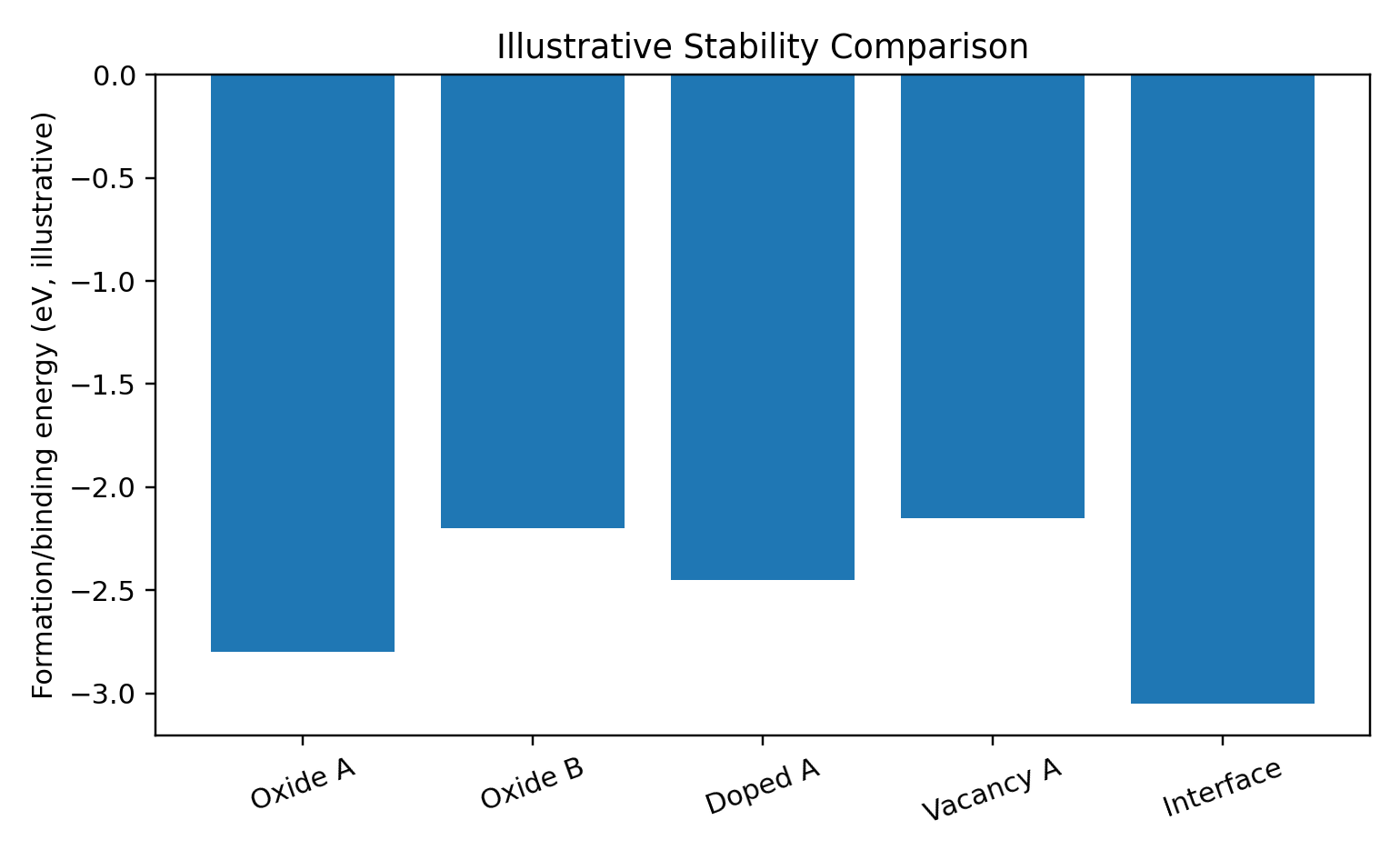
Metal oxide nanomaterials are among the most important functional materials for modern energy-storage and energy-conversion technologies. Their usefulness originates from the wide range of crystal structures, oxidation states, surface chemistries, electronic configurations, optical responses, catalytic activities and defect-dependent properties that can be achieved by changing composition and nanoscale architecture. Density Functional Theory (DFT) provides an atomistic framework for understanding these properties before or alongside experimental synthesis. A carefully designed DFT study can determine optimized structural parameters, formation and binding energies, electronic band structures, band gaps, density of states, projected density of states, charge transfer, chemical bonding, work functions, optical and dielectric functions, magnetic moments, mechanical properties, phonon stability, surface energies, adsorption energies, ion-diffusion barriers and reaction energetics. These descriptors are directly connected to battery electrodes, supercapacitors, photocatalysts, electrocatalysts, fuel cells, hydrogen production, carbon-dioxide conversion and solar-energy devices. This article presents an extended computational framework for metal oxide nanomaterials, emphasizing how each calculated property should be interpreted and how graphical outputs can be used to build a scientifically meaningful results section. Particular attention is given to oxygen vacancies, substitutional doping, strain and heterostructures because these approaches can modify charge transport, band alignment, surface reactivity and ion mobility. The graphs included in this document are explicitly illustrative schematics rather than fabricated first-principles results. For a publication or thesis, they should be replaced by plots generated from the actual DFT output of a specified material and computational setup.
Downloads
References
Hohenberg, P., & Kohn, W. (1964). Inhomogeneous Electron Gas. Physical Review, 136, B864–B871.
Kohn, W., & Sham, L. J. (1965). Self-Consistent Equations Including Exchange and Correlation Effects. Physical Review, 140, A1133–A1138.
Perdew, J. P., Burke, K., & Ernzerhof, M. (1996). Generalized Gradient Approximation Made Simple. Physical Review Letters, 77, 3865–3868.
Kresse, G., & Furthmüller, J. (1996). Efficiency of ab-initio total energy calculations for metals and semiconductors using a plane-wave basis set. Computational Materials Science, 6, 15–50.
Kresse, G., & Furthmüller, J. (1996). Efficient iterative schemes for ab initio total-energy calculations using a plane-wave basis set. Physical Review B, 54, 11169–11186.
Heyd, J., Scuseria, G. E., & Ernzerhof, M. (2003). Hybrid functionals based on a screened Coulomb potential. Journal of Chemical Physics, 118, 8207–8215.
Manzeli, S., Ovchinnikov, D., Pasquier, D., Yazyev, O. V., & Kis, A. (2017). 2D transition metal dichalcogenides. Nature Reviews Materials, 2, 17033.
Yu, X., Marks, T. J., & Facchetti, A. (2016). Metal oxides for optoelectronic applications. Nature Materials, 15, 383–396.
Makkar, P., & Ghosh, N. N. (2021). A review on the use of DFT for the prediction of the properties of nanomaterials. RSC Advances, 11, 27897–27924.
Butler, K. T., Gautam, G. S., & Canepa, P. (2019). Designing interfaces in energy materials applications with first-principles calculations. npj Computational Materials, 5, 19.
Li, F., Ran, J., Jaroniec, M., & Qiao, S. Z. (2015). Solution combustion synthesis of metal oxide nanomaterials for energy storage and conversion. Nanoscale, 7, 17590–17610.
An, C., Zhang, Y., Guo, H., & Wang, Y. (2019). Metal oxide-based supercapacitors: progress and prospectives. Nanoscale Advances, 1, 4644–4658.
Regulation of intrinsic physicochemical properties of metal oxide nanomaterials for energy conversion and environmental detection applications. Journal of Materials Chemistry A (2020).
Recent advances in engineered metal oxide nanostructures for supercapacitor applications: experimental and theoretical aspects. Journal of Materials Chemistry A (2021).
Layered transition metal oxides for energy conversion and storage: a comprehensive review. Journal of Energy Storage (2025).
Downloads
Published
License
Copyright (c) 2025 Musa Khan, Tawsif Ahmad, Moneeb Ahmad, Waqar Ahmad (Author)

This work is licensed under a Creative Commons Attribution 4.0 International License.
How to Cite